
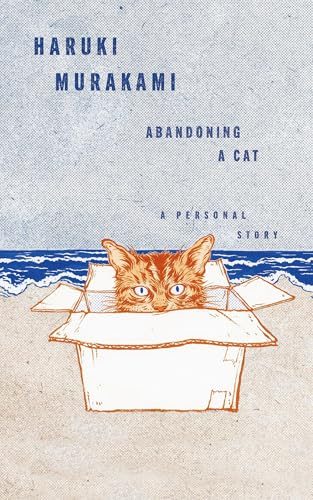
Abandoning a Cat
by Haruki Murakami
Murakami's short personal essay looks back at his father's life and their long distance from each other, and asks what a son inherits from a parent.
Good for
About the book
This is a short autobiographical essay in which Murakami writes about his father, a teacher and haiku writer whose life was shaped by war. It follows the gap that grew between father and son, and asks what it means to be a son, a father, and part of a particular time in Japan's history.
What readers keep from this book
-
Small things make a person
Murakami suggests that who we are comes less from big events than from a huge pile of minor, forgettable moments. He builds the essay from such details, treating them as the real material of a life and of a family's history.
-
We are shaped by our era
The essay holds that people can't step outside the time they live in. Murakami's father was caught up in a war, and the author sees his own life as marked by the world that came after it, so personal history and national history are tied together.
-
Some pain never gets fully spoken
Murakami points out that many people carry a hard experience they can't put into words and can't let go of. He treats his father's silence about the past in this light, and the essay becomes an attempt to understand what was never said between them.
Who it is for
Readers who want a short, quiet, honest piece about fathers and sons, and those curious about Murakami's own life behind his fiction. It suits anyone thinking about a distant or lost relationship with a parent. Readers looking for a plot-driven story or a full memoir should pass.
If you liked this
Something wrong on this page? Write to hello@usebecoming.com and we will fix it.