
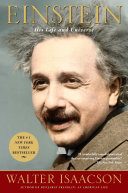
Einstein
by Walter Isaacson
Walter Isaacson's biography of Albert Einstein traces how a rebellious, nonconforming streak shaped both his life and his scientific discoveries.
Good for
About the book
Isaacson's biography follows Albert Einstein from boyhood onward and argues that his rebellious, nonconforming character drove his life and his science. It looks at how his mind worked and at the mysteries of the universe he uncovered.
What readers keep from this book
-
Imagination matters more than facts
The book shows Einstein valuing a trained, free-roaming mind over stored knowledge. He saw education as practice in thinking, and he leaned on imagination to reach ideas that facts alone could not. Isaacson presents this as the core of how he worked.
-
Question authority to find the truth
Isaacson ties Einstein's science to his refusal to bow to authority. Being a rebel from boyhood let him doubt accepted views and follow his own reasoning. The book treats this stubborn independence as a condition for discovery, not a flaw.
-
Wonder keeps the work alive
Einstein described the mysterious as the deepest feeling behind both art and science. The book keeps returning to his childlike curiosity about the universe, and to the peace he found in studying it. That sense of awe sits beside his loner streak and his bond with humanity.
Who it is for
Readers who want to understand how Einstein thought and why his character mattered as much as his equations will get the most from this. It suits anyone curious about creativity and independent thinking. Those wanting a short technical explanation of physics alone may find the focus on the man too wide.
If you liked this


Something wrong on this page? Write to hello@usebecoming.com and we will fix it.