
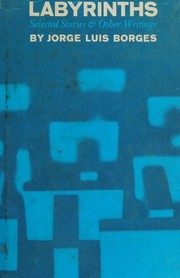
Labyrinths
by Jorge Luis Borges
A guide to Labyrinths, a selection of about forty stories, essays and short pieces by Jorge Luis Borges, and the ideas about time, identity and infinity readers keep from it.
Good for
About the book
Labyrinths gathers about forty pieces by the Argentine writer Jorge Luis Borges, drawn from several of his books. It covers stories, essays and short prose, and it opens with a critical introduction and a bibliography.
What readers keep from this book
-
Time is what we are made of
Borges treats time as something a person cannot stand outside of. Several pieces play with the idea that the past and future exist only as present memory or hope, and that the self is carried along by time and is also the thing that carries it. The tone is calm, even when the claim is unsettling.
-
One person can be everyone
The book keeps returning to the thought that the deeds and words of one person belong to all people. Whoever repeats a line of a poet becomes that poet in a small way, and one act echoes through all of history. Borges also splits his own self in two, the man who lives and the writer whose name is on the books.
-
The world is a maze with no map
Libraries, palaces, and whole imagined worlds serve as pictures of a universe that cannot be fully understood. Borges is drawn to the puzzle for its beauty, not for any answer it gives. Characters search for meaning, and the stories leave open whether any is there to find.
Who it is for
This book suits readers who enjoy short, dense pieces that play with ideas and who are happy to reread. It rewards anyone curious about time, identity, books and infinity. Readers who want a plot-driven story with clear resolutions, or plain and direct prose, may find it frustrating.
If you liked this
Something wrong on this page? Write to hello@usebecoming.com and we will fix it.