
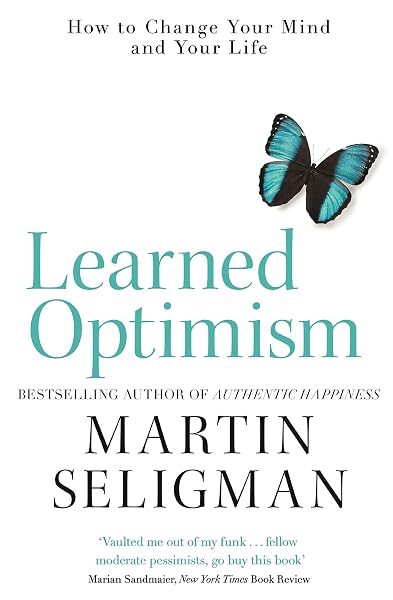
About the book
The book looks at optimists and pessimists and asks why some people bounce back from defeat while others give up. It argues that the habit of explaining events to yourself can be changed, and it offers techniques for doing so at home, at school and at work.
What readers keep from this book
-
Your explanations are the part you control
You can't pick what happens to you, but you can pick the story you tell about it. The book treats that story as the thing to work on, since it shapes how you feel and what you do next.
-
Pessimists see three things in a setback
A pessimist expects a bad event to last, to spread into everything, and to be their own fault. An optimist sees the same knock as brief, limited to one area, and often caused by circumstances or other people. Keeping trouble in its own box means one failure doesn't pull down the rest of your life.
-
Argue back against your automatic thoughts
Feelings and actions follow your beliefs about a hard event, not the event itself. So when you feel low, anxious or angry, ask what you are telling yourself, then test it against the evidence. Sometimes the belief is right and you act on it; often it is a distortion you can challenge.
Who it is for
This suits readers who tend to expect the worst, quit after setbacks, or want practical mental exercises backed by research. It also helps parents, teachers and managers who want to encourage persistence in others. Readers who want only a light read on happiness may find the technique-heavy parts slow.
If you liked this
Something wrong on this page? Write to hello@usebecoming.com and we will fix it.