
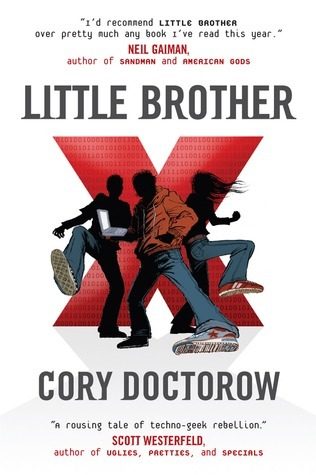
Little Brother
by Cory Doctorow
A teenage hacker is jailed after a terrorist attack, then fights back against a city turned into a surveillance state. A novel about privacy, power and tech.
Good for
About the book
Marcus is a seventeen-year-old who knows computers well and uses that skill to dodge his school's surveillance. After an attack on San Francisco, he and his friends are held and questioned by Homeland Security, and he decides to fight back against what the city becomes.
What readers keep from this book
-
Security is judged by how it fails
The novel treats every security system as something to be tested for weak spots. Marcus's school tricks and later schemes rest on the point that a system matters less for how it works than for how it breaks. The narrator even urges readers to go try this themselves.
-
Privacy is part of being free
Marcus argues that everyone needs a corner of life that nobody else sees, and that there is nothing shameful in wanting one. The book ties this to rights, laws and the idea that rulers must follow the rules they set. Surveillance is shown as something that wears down all of that together.
-
Fear is used to take freedom away
After the attack, the city treats every person as a suspect, and officials defend it as the price of safety. The novel pushes back through Marcus and the people around him, who say that giving up liberty out of fear hands the attackers a win. It also shows that the harshest treatment lands unevenly on different people.
Who it is for
This book suits teenagers and adults who like fast, technical thrillers and want to think about privacy, policing and civil liberties. It also suits anyone curious about how computers and security systems really work. Readers who want subtle characters or little lecturing may find it too pointed.
If you liked this


Something wrong on this page? Write to hello@usebecoming.com and we will fix it.