
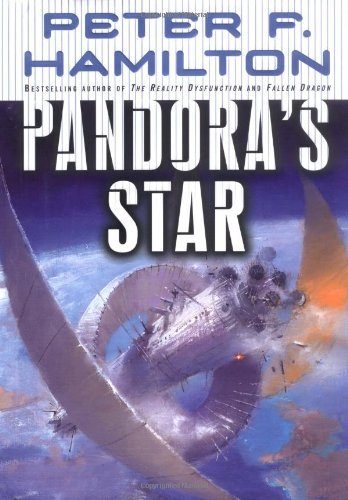
Pandora's Star
by Peter F. Hamilton
A space epic set in 2380, when a star vanishes a thousand light-years away and a crewed ship sets out to learn why, while a cult warns of a hidden enemy.
Good for
About the book
Humanity has spread across hundreds of worlds linked by wormhole tunnels when an astronomer sees a distant star disappear. A starship is sent to find out what happened, while a cult claims an alien manipulator is working against the mission and a government agent hunts its leader.
What readers keep from this book
-
Long lives change how people think
The book imagines people who can rejuvenate their bodies again and again, and it asks what that does to their outlook. Characters marry several times, grow weary, or find that age still adds wisdom even when the body resets. Long life is shown as both a gift and a burden.
-
Civilization is easy to take for granted
Hamilton ties progress to a stable society that can support thinkers across many generations. Characters keep noticing how much comfort and order they rely on, and how fast that could slip away. The threat from the vanished star makes that fragility feel real.
-
Trust is tested when no one can be sure
The cult's warning of sabotage leaves the ship's captain wondering about his own crew. The novel keeps asking when a warning is paranoia and when it is sense. Protest, authority and loyalty all come under strain as doubt spreads.
Who it is for
Readers who enjoy big, long science fiction with a large cast, many settings and a slow build toward a threat. It suits those who like speculation about technology and society as much as action. Anyone wanting a short, tightly focused read should pass.
If you liked this



Something wrong on this page? Write to hello@usebecoming.com and we will fix it.