
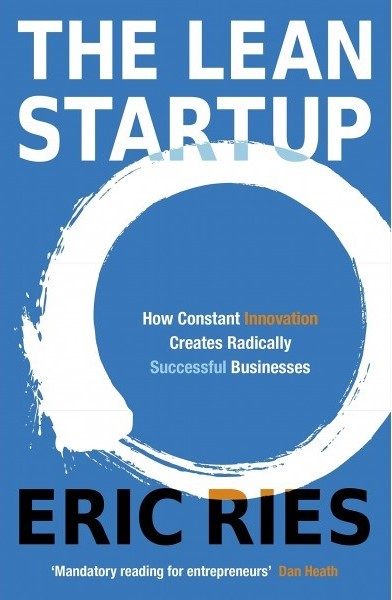
The Lean Startup: How Today's Entrepreneurs Use Continuous Innovation to Create Radically Successful Businesses
by Eric Ries
A look at Eric Ries's The Lean Startup, which treats building a new business as a series of tests with customers rather than a bet on one plan.
Good for
About the book
Eric Ries takes on why so many new businesses fail and argues that much of that failure can be avoided. He lays out a method for finding out what customers actually want, testing a vision in small steps, and changing course while there is still time.
What readers keep from this book
-
Learning speed is the real edge
Ries argues that a young company wins by finding out the truth about its customers faster than its rivals do. Progress is counted by what the team has learned about solving a customer's problem, not by how much it has built or shipped.
-
Build the smallest test first
The book describes a minimum viable product as the simplest thing that lets a team start learning. Anything added beyond that is treated as waste, however important it seemed. The idea feeds a loop of building, measuring and learning that the book places at the center of its method.
-
Watch what customers do, then pivot
Ries says what people claim to want and what they need can differ, so teams should go and see for themselves and start with the early adopters who feel the need most. He adds that founders who changed direction usually wish they had done it sooner. Leaders, in his view, must make room for experiments and treat failures as a flaw in the system, not a person's fault.
Who it is for
Best for founders, product people and managers who are about to launch something new and want a way to test it cheaply before committing. It also suits anyone inside a larger company who has to build under uncertainty. Readers who want a detailed financial or operations manual, or who already run experiments with customers every week, may find it familiar.
If you liked this

Something wrong on this page? Write to hello@usebecoming.com and we will fix it.