
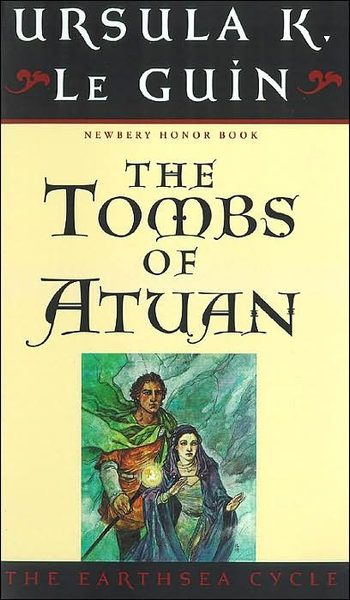
The Tombs of Atuan
by Ursula K. Le Guin
A young priestess raised to guard a labyrinth of buried tombs meets a stranger who shows her a world outside, and she must decide what to do with her freedom.
Good for
About the book
Tenar is given as a girl to serve ancient, nameless Powers and guard their tombs, losing her family and her own name in the process. When a wizard enters the tombs to take a hidden treasure, she has to choose between her duty and a life she has never seen.
What readers keep from this book
-
Freedom is a choice, and it is heavy
The book treats freedom as something a person takes up, not something handed over. When Tenar breaks away, she does not feel simple joy. She cries for the years she wasted, and she begins to see that being free brings its own burden.
-
Dark powers exist but deserve no worship
The world is shown as both beautiful and cruel, and the book says neither side should be denied. The dark Powers are real, but bowing to them is what lets evil settle in a place. Respect for them is not the same as serving them.
-
Trust lets two people do what one cannot
Tenar knows the tombs and Ged has skill, and neither can get out alone. The story says each is weak by themselves, but trust between them makes them stronger than the dark around them. Getting free here is shared work.
Who it is for
Readers who like a quiet, serious fantasy about growing up and breaking away from a life that was chosen for you. It suits anyone who wants a short story with big ideas about freedom and trust. Readers who want fast action or a sprawling quest may find it too slow and enclosed.
If you liked this
Something wrong on this page? Write to hello@usebecoming.com and we will fix it.