
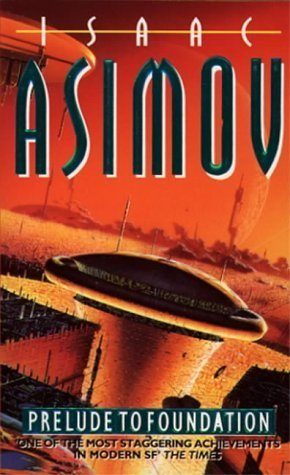
Prelude to Foundation
by Isaac Asimov
A guide to Prelude to Foundation by Isaac Asimov, in which a young mathematician arrives on the capital world with a theory that could predict the future.
Good for
About the book
Hari Seldon, a young mathematician from an outlying world, comes to the vast capital of a galactic empire to present his theory of psychohistory. Emperor Cleon I wants to read the future, and that makes Seldon's idea very valuable to those in power.
What readers keep from this book
-
Belief can matter more than truth
The book suggests that a prediction does not have to be possible to have power. What counts is whether people think it is. A mathematician's confident forecast may be believed by crowds who cannot follow the math.
-
Rulers keep control by dividing people
The novel describes how a central power can stay in charge without much force. It encourages neighbors and social classes to distrust one another, so no one stands together against it. Revolt and reform are shown to change rulers more often than they help the poor.
-
Asking questions is worth a life
Seldon is drawn to finding answers and puzzled that so many people never ask. The book also warns about narrow expertise, which cuts knowledge into pieces, and about shrugging at injustice with a quick 'too bad.' Trying is presented as better than giving up because the odds look poor.
Who it is for
Readers who like big-idea science fiction built on talk, argument and intrigue more than battles. It suits anyone curious about how societies change and who holds power. Readers who want fast action or deep character portraits may find it slow.
If you liked this
Something wrong on this page? Write to hello@usebecoming.com and we will fix it.